DESIGN YOUR WORLDCedar Rapids, Iowa Reserve a spot

Four pathways, one studio

Pick the one that
fits your child.

These are not beginner, intermediate and advanced. They are four genuinely different experiences, and the right one depends far more on temperament than on ability.

Components sorted into compartments on a workshop bench Everything sorted before anything gets built

Side by side

What each one asks of your child.

The honest differences, including the parts that are hard. A programme that suits one child badly is not a bad programme, it is a bad match.

FIRST LEGO League

The team pathway
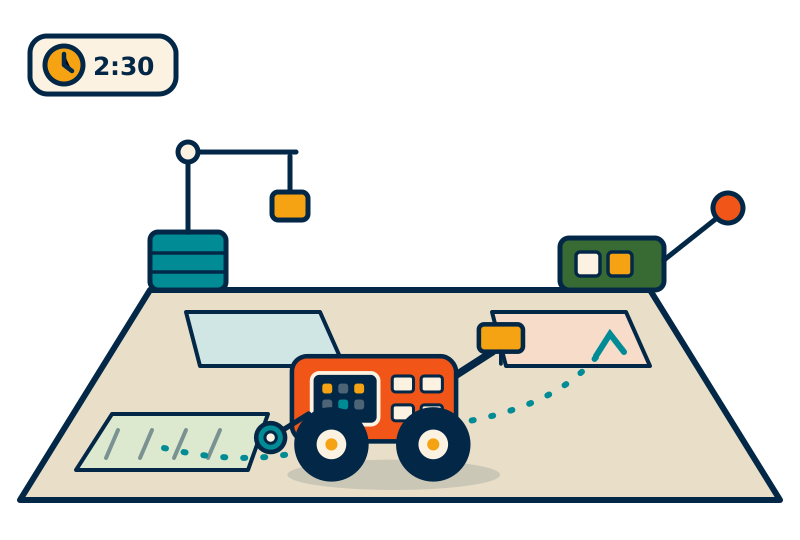
A competition robot with a programmable hub and colour sensor driving an autonomous route across a mission mat between two mission models
Best for
Children who come alive around other people and want something to aim at.
Grades
Roughly 2 to 8, depending on the edition and the child.
They build
A robot that runs missions on its own, plus an innovation project.
The hard part
Sharing a robot. Disagreeing well. Losing a match and coming back.
Read the programme

Magic Pets Robotics

Build it yourself, keep it

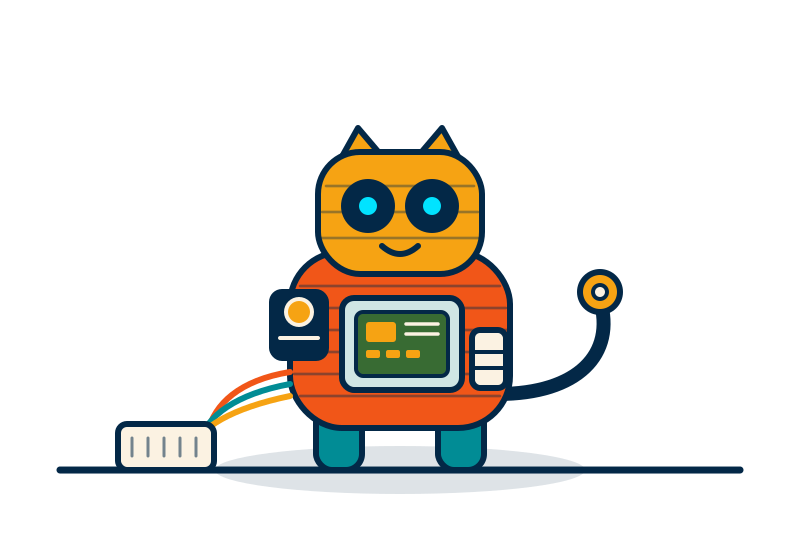
A 3D printed robotic pet showing print layer lines, a microcontroller behind a chest window, a shoulder servo and jumper wires running to a breadboard
Best for
The child who takes the remote control apart to see what is inside.
Format
An individual build. Every student finishes their own machine.
They build
A printed robotic pet they wire, program and take home working.
The hard part
Electronics are unforgiving. One wire in the wrong hole and nothing moves.
Read the programme

Invention Convention

Their idea, start to finish

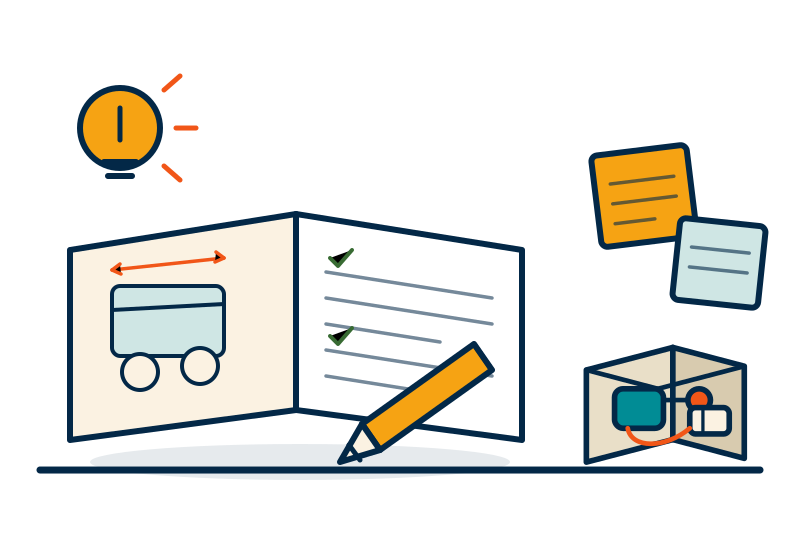
An open engineering notebook with a labelled sketch and dimensions, a pencil, sticky notes and a cardboard prototype driven by a motor and battery
Best for
The child with a notebook full of ideas nobody has taken seriously yet.
Format
Individual, self-directed, coached closely.
They build
A working prototype and a pitch they deliver on their own feet.
The hard part
Nobody hands them the problem. Choosing one is the first real test.
Read the programme

Science Fair

Evidence over opinion

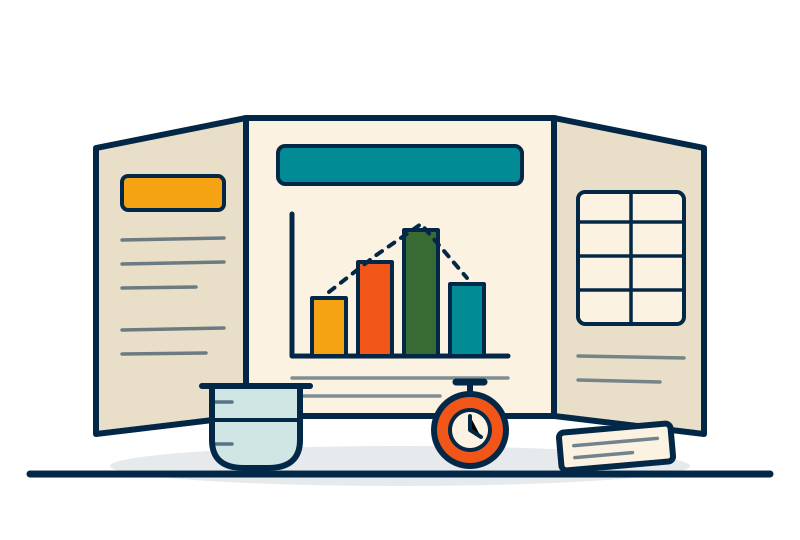
A trifold science fair display board showing a question card, a bar chart of results and a data table, with a beaker, a stopwatch and index cards in front
Best for
The child who asks why until the adult runs out of answers.
Grades
3 to 5 for the Junior fair. Older students enter the senior division.
They build
An investigation, a dataset they gathered themselves and a board they defend.
The hard part
Real data is messy and sometimes says you were wrong. That is the lesson.
Read the programme

The parts that never change

Whichever pathway you pick, this is constant.

The projects differ enormously. The way the studio treats a student does not.

  • Small cohorts. Enough students to argue productively, few enough that everybody builds.
  • Real equipment. Printers, sensors, drivers and software that adults use.
  • Coached by an engineer. Every session, not a rotating pool of instructors.
  • Something to show at the end. A showcase, a fair or a tournament, and a build that goes home.
  • Room to fail first. Nothing works on the first attempt here and nobody pretends otherwise.

Beyond the four

The studio has run a lot more than this over fourteen years.

Design Your World has also delivered STEM conferences, an Electronics Fashion Camp and a Secret Life of Robots camp, among others. Formats come back when there is demand for them, so it is always worth asking.

We also work occasionally with schools, homeschool groups and community organisations around Cedar Rapids to run structured programming for a whole group. If that is what you are after, say so in your message and we will talk about what is realistic.

Still not sure

Two minutes will narrow it down better than an hour of reading.

The programme finder asks four questions about your child, not about their grades, and points you at the pathway that usually fits. It is not binding and it is not a sales funnel.

Call Reserve a spot